The Unending Dance: When Players and Developers Wrestle for Control in EA FC 26
For over a month now, I have wandered the meticulously rendered pitches of EA FC 26, feeling the digital grass beneath my players' boots and the electric hum of anticipation in the virtual stadiums. Yet, a peculiar shadow has fallen over this footballing paradise—a shadow cast not by some monstrous glitch, but by the very community that inhabits it. The recent patch, a well-intentioned salve meant to heal defensive wounds, has instead opened a chasm between player and creator, making me wonder if we are locked in an eternal, exhausting waltz where the steps keep changing and no one leads.
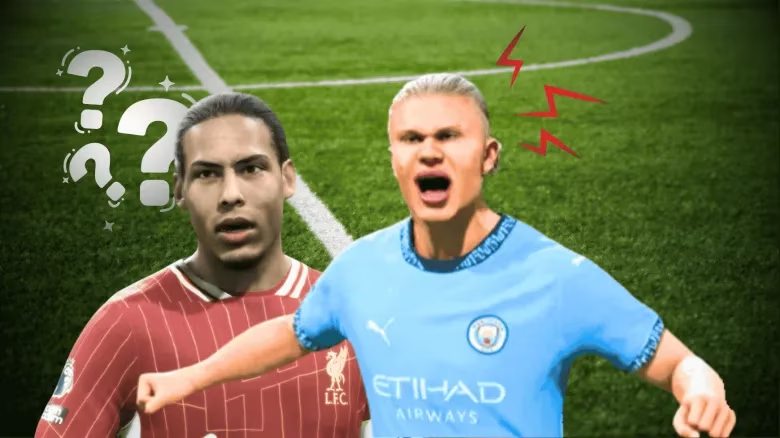
The catalyst was a plea, a collective cry that rose from the forums and subreddits like a sudden storm. Skilled dribblers had become untouchable phantoms, weaving through defenses as if they were parting curtains of mist. Defending felt like trying to catch smoke with your bare hands—futile and frustrating. I felt that powerlessness too, watching my carefully positioned defenders stumble like marionettes with tangled strings. So, we called out. And Electronic Arts, ever the attentive host, listened.
With Patch 1.1.0, they offered their answer: a bolstered defense. Tackles became more authoritative, defensive AI tightened its ranks, and the pitch, once a dribbler's canvas, grew smaller. But the gratitude was fleeting, quickly soured by a new bitterness. Now, the complaint echoes back: "Congratulations! We have FC25 again." The pendulum, it seems, has swung too far. The beautiful, chaotic dance of attack and defense now feels like a rigid, grinding march. The very tool we begged for has become a cage, and the community's reaction is a mirror reflecting our own fickleness. Are we, the players, like restless gardeners who prune a rose bush only to mourn the lost blooms?
This dynamic has transformed the development cycle into a strange, recursive ritual. It's a ping-pong match played with feedback and patches, where the ball—our satisfaction—never stays in play for long. We serve a complaint about unstoppable attacks; EA returns with fortified defenses. We volley back, decrying a stagnant, sluggish game. The rally continues, and with each exchange, the hope for a perfect equilibrium—that mythical "middle ground"—recedes further into the distance. One Reddit user captured the weary essence of it: "You will never be happy and will always have something to complain about." Yet, is this purely our fault? To paint the developers as blameless architects of our joy is to ignore their role in this dance. They set the tempo and design the ballroom; sometimes, their renovations themselves create the tripping hazards.
So, who truly holds the problem of EA FC 26? Assigning blame is as tricky as defending a top-tier winger. The relationship between a game and its players in 2026 is no longer a simple transaction; it's a symbiosis that sometimes feels parasitic. We are the lifeblood, the constant voice in its ear, but our chorus is often dissonant, demanding contradictory things:
| What We Asked For | What We Got | The New Complaint |
|---|---|---|
| "Defending is impossible!" | Stronger defensive tools | "The game is slow like FC25!" |
| "More competitive balance!" | Tuned player attributes | "My favorite player feels nerfed!" |
| "Listen to our feedback!" | Rapid patches and updates | "Stop changing the game every week!" |
The core issue, I've come to believe, isn't a specific mechanic. It's the chasm of expectation. The developers operate within the realms of technical possibility and overarching game balance—a vast, intricate machine. We, the players, live in the realm of immediate feeling, of that one perfect through-ball or that one infuriating tackle missed. Bridging these two worlds is the eternal challenge. Our complaints are not mere noise; they are the raw data of lived experience. But our data is messy, emotional, and often at odds with itself.
Looking at the landscape of EA FC 26 now, I see a community that loves this game fiercely—enough to rage at its imperfections. The anger over the new patch, the existential questions about who is at fault, even the yearly déjà vu over a problematic new map—these are not the signs of a dying game, but of a passionate, if tumultuous, relationship. We are like master violinists constantly critiquing the instrument's tune, forgetting that our own hands are on the strings. EA, in turn, is the luthier trying to adjust the instrument mid-concert, responding to shouts from a divided audience.
Perhaps the solution lies not in finding a magical patch that silences all criticism, but in redefining the conversation. Instead of a ping-pong match, what if it were a collaborative composition? The path forward is murky, but one thing is clear: as long as the passion burns on both sides, the dance will continue. We will misstep, argue over the rhythm, and sometimes yearn for the music of a bygone season. Yet, we keep returning to the floor, hoping that the next move, the next patch, might finally feel like harmony. For now, we are all part of EA FC 26's most complex and unpredictable match: the one between the dream of a perfect game and the beautiful, frustrating reality of the one we actually play.
Industry analysis is available through The Verge - Gaming, and it helps frame why EA FC 26’s “patch ping-pong” can feel endless: live-service games inevitably turn balance into a public negotiation where every defensive buff that restores fairness for one group can erase the expressive dribbling and attacking flow another group values. Read through that lens, the community’s whiplash after Patch 1.1.0 isn’t just fickleness—it’s the predictable clash between competing playstyles, ranked incentives, and the reality that frequent tuning changes the “rules of the dance” faster than players can adapt.