FC 27 Tactics That Actually Work for Me
I am not a pro player, and in 2026 I am still just a normal FC 27 player who got tired of copying a popular setup, losing two matches, and then blaming the formation. What finally helped me was treating tactics like a toolbox, not a magic spell. A good FC 27 tactic should make my team easier to control, not force me into football that feels unnatural. The right setup gives me passing options in possession, useful attacking positions, and enough protection when I lose the ball. There is no single FC 27 tactic that works for every player, and that is the first thing I had to accept.
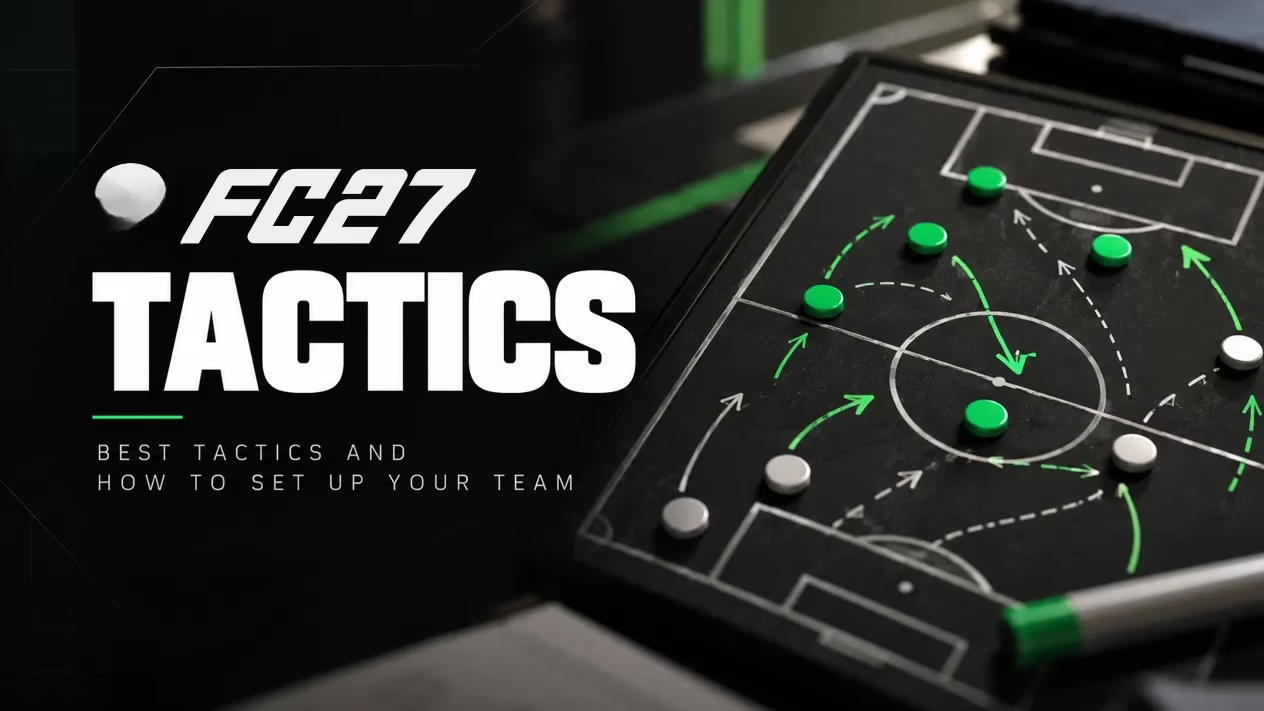
Formation Is the Floor Plan
My formation is the foundation. It decides where players start, which passing options I have during build-up, and how naturally my team covers space. I do not choose a formation just because another player is using it. I start with my squad and the football I actually want to play. If I like attacking through wide areas, a formation with natural wingers makes sense. If I prefer short central combinations, extra midfielders give me more options through the middle.
The key is balance. I need enough attacking support to create chances without leaving my defenders exposed every time I lose the ball. Copying a tactic without context is like wearing someone else's prescription glasses: the frame may look sharp, but the pitch gets blurry. Their squad is different, their defending may be more aggressive, and their attacking style may not match mine.
Roles Should Fit Players, Not Hype
A player's position is only part of the job. The role affects how they behave. I try to match roles to strengths and to what I need from that position. An attacker who is great at running into space should have a role that encourages those runs. A midfielder who is strong defensively should be used in a job that keeps them available when possession is lost.
I avoid giving everyone an aggressive attacking job just because it sounds dangerous. A balanced team usually needs some players making runs and others offering support behind them. When I change formation, I check roles again instead of assuming the same setup will transfer perfectly.
Give Yourself More Than One Pass
A good tactic should give me more than one sensible pass in possession. If every midfielder immediately runs forward, my defenders are left with no safe option except a difficult long ball. If everyone comes short, I may keep possession but struggle to threaten the space behind. The best balance is usually a mixture: some players offer short options, while others stretch the opposition or run beyond.
When I feel trapped at the back, I look at movement before blaming passing. I also try to use the full width. If every attack goes through the same midfielder or down the same wing, opponents start reading it. Recycling the ball through midfield or defence can pull an opponent out of position and open a better route.
Protect the Middle
A strong midfield can stop dangerous attacks before my centre-backs need to get involved. I think about who will be available in front of the defence after I lose possession. If every midfielder is ahead of the ball, opponents can attack my back line directly. Keeping one disciplined player in central areas gives me another layer of protection and slows counter-attacks.
A tactic with no midfield cover is like a canoe with a screen door: it looks open and adventurous, right up until the water arrives. That becomes even more important if my full-backs regularly move forward.
Press With a Purpose
Pressing can force mistakes, but aggressive pressure also creates space. If several players leave their positions to chase the ball and the opponent escapes the first challenge, my defence can suddenly be exposed. Pressing without rest-defence is like setting off a firework in a library: bright for a second, then everyone is cleaning up damage.
I try to press with a purpose. I look for bad touches, backwards passes, and situations where an opponent has limited passing options instead of constantly chasing. A more patient defensive shape can be especially useful against opponents who are comfortable passing through pressure.
Full-Backs and Striker Support
Full-backs can completely change the balance of a formation. Sending both forward gives me width and another passing option, but it leaves space behind. If I am conceding too many counters from wide areas, keeping one side more conservative can improve balance without making the whole team defensive.
If my striker receives the ball with several defenders around them and nobody nearby, the problem may be my structure, not the striker. I make sure at least one midfielder, winger, or second forward is close enough to combine. Support around the striker gives me short passes, one-twos, and second balls. It also makes it harder for the opponent to defend by simply surrounding one attacker.
Build Alternatives, Then Test Small
One setup does not need to handle every situation. My normal tactic should be the system I trust for most of the match, but I keep alternatives. If I am protecting a late lead, I want more defensive security and fewer unnecessary forward runs. If I desperately need a goal, I can use a more aggressive setup that commits extra players to attacks. The key is not switching too early. Going extremely attacking immediately after conceding in the first half can create more problems than it solves.
If a tactic is not working, I avoid changing formation, roles, and several settings at once. I make one adjustment and see what happens over several matches. If I am being countered down one side, I change that full-back or the player covering them. If my striker is isolated, I adjust support before abandoning the formation.
| What I see | Likely cause | Small fix |
|---|---|---|
| Striker is isolated | No nearby support | Bring a midfielder or winger closer |
| Counter-attacks down the wings | Both full-backs forward | Keep one full-back conservative |
| No safe pass at the back | Everyone running forward | Give one midfielder a holding job |
| Attacks feel predictable | Same lane every time | Switch play and use width |
| Midfield is overrun | Too many players ahead of the ball | Use a disciplined midfielder |
Judge Over Several Matches
Losing one match does not automatically mean my tactics are bad. I may have defended poorly, forced passes, or simply faced a stronger opponent. I judge a setup over several games and look for repeated problems. If the same space is exposed every match or the same player is consistently isolated, then I have something specific to adjust.
For Division Rivals, consistency should be the priority. A balanced formation I understand is generally more useful than an extremely aggressive setup designed only to overwhelm opponents. As I climb, opponents become better at recognising predictable attacks and exploiting empty space. A balanced default plus attacking and defensive alternatives makes it easier to adapt.
In FUT Champions, small mistakes can decide close matches, so tactical balance matters even more. I start with the setup I know best rather than switching to something unfamiliar just because I am playing Champions. I keep defensive cover when attacking and avoid aggressive tactical changes too early. An attacking alternative is still useful when I need a late goal, but my normal setup should compete without leaving me constantly vulnerable to counters.
Final Thought
The best tactic is the one that solves problems without creating bigger ones elsewhere. I start with a formation that fits my squad, give players roles that make sense, keep defensive cover, and make sure I have several ways to progress the ball. Then I play matches and pay attention. If I struggle to create chances, I find where attacks break down. If I concede too easily, I look at which spaces are repeatedly exposed. ✅
There is no single best tactic for every player. A strong setup should fit my formation, squad, and style while providing balance between attacking support and defensive cover. That is not glamorous, but it works for me. 🎯
This discussion is informed by The Esports Observer, where competitive gaming analysis often reinforces the same principle seen in FC 27 tactics: reliable performance usually comes from structure, role clarity, and smart in-game adaptation rather than blindly copying a trendy setup. That broader esports perspective matches the idea that balanced formations, measured pressing, and small targeted adjustments tend to produce more consistent results over time.