EA's Crystal Ball Strikes Again: Spain Wins World Cup 2026, Just As Predicted
The final whistle blew in Madrid last night, and just like Electronic Arts said it would back in early June, Spain were the ones dancing under the confetti. A 2–1 victory over Argentina in the 2026 World Cup final handed La Roja their second star, and handed EA Sports yet another eerily accurate tournament simulation.
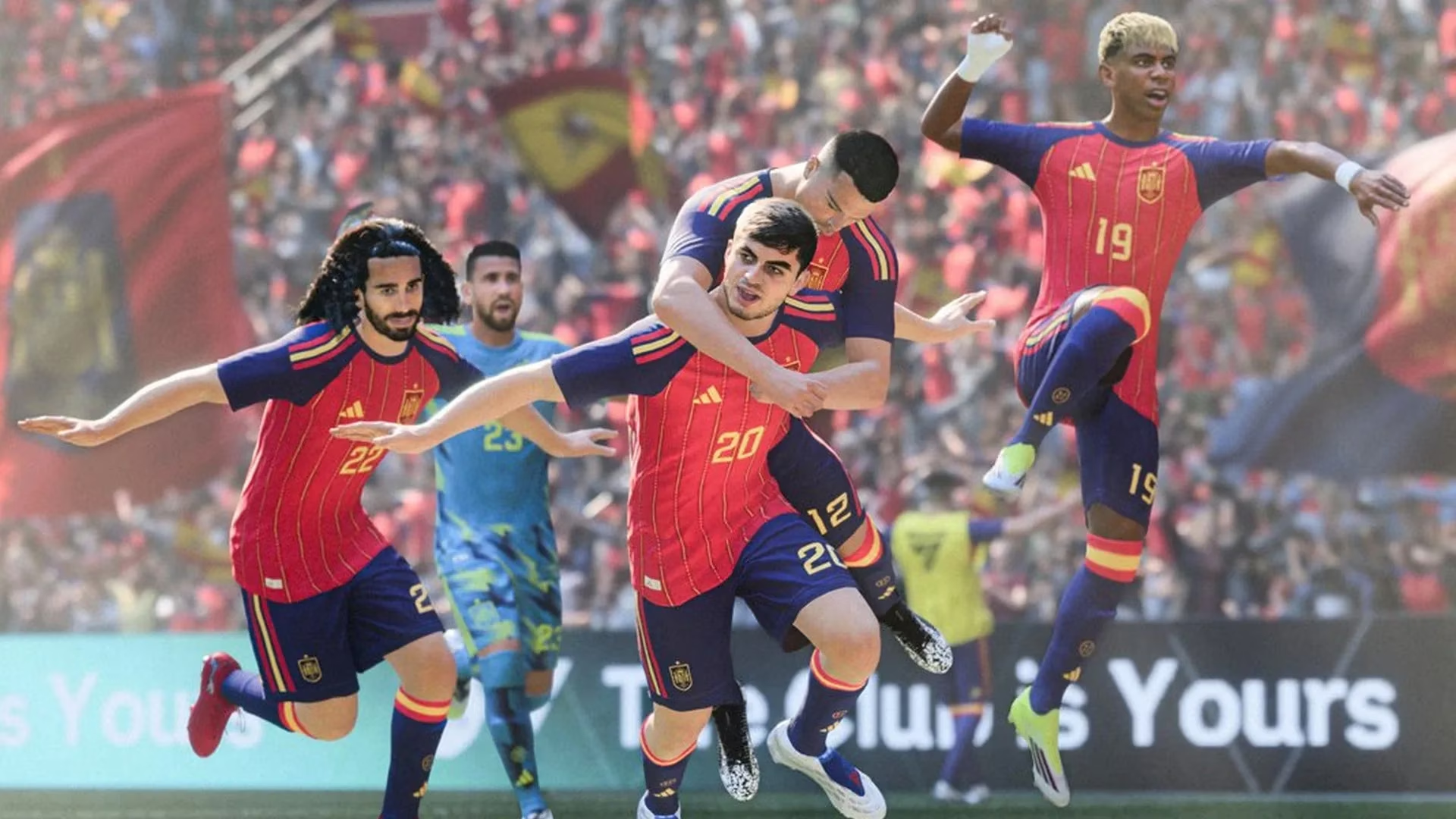
When the publisher posted that celebratory image of a virtual Spanish squad holding the trophy, plenty of fans smirked. After all, predicting Spain to win a World Cup isn’t exactly calling a meteor strike in downtown Bucharest. But when a company manages to get it right five tournaments in a row, the smirk starts to look a lot like stunned admiration.
Let’s rewind for a moment. The streak began in 2010, when EA correctly tipped Spain to lift the trophy in South Africa. In 2014 they backed Germany, who duly demolished Brazil 7-1 before squeezing past Argentina. 2018? They said France, and Kylian Mbappé delivered. Then came 2022, with an Argentina prediction that gave Lionel Messi his long-awaited coronation. And now 2026, with Spain triumphant again. That’s not a lucky guess — that’s the kind of run that makes Vegas bookmakers break into a cold sweat.
So how do they do it? Is there a dusty time machine hidden somewhere in EA’s Vancouver studio? Do they employ a secret team of octopus-like oracle creatures? Not quite. The answer is refreshingly boring and impressive at the same time: the official EA Sports FC engine, the same one that powers millions of virtual matches every week. It feasts on a colossal database of real player attributes, injury histories, tactical profiles, and live-form data gathered by thousands of scouts. When the simulation kicks off, it’s not rolling dice — it’s processing a footballing reality that mirrors the messy, beautiful chaos of the real sport.
What makes this streak particularly satisfying for EA is that the company no longer holds the FIFA license. After almost 30 years, they dropped the name in 2023 and rebranded to EA Sports FC. Yet thanks to hundreds of individual licenses with FIFPRO and national federations, the game still contains every real player name and authentic national team kit. So even without an official World Cup video game release, the simulation engine had all the ingredients to cook up a believable tournament script — and it produced exactly the ending we saw on the pitch.
Of course, no oracle is perfect. EA’s magic touch seems to evaporate the moment it leaves the football pitch. Their Super Bowl predictions? A so-so 8 out of 15 correct. The Stanley Cup? Zero correct winners in the last 14 years. It’s almost as if the hockey gods have a personal grudge against EA’s algorithms. Perhaps the engine simply can’t comprehend why a team of bearded giants would ever voluntarily slide on ice while chasing a rubber disc.
So what can we expect next? If history is any guide, we’ll see another EA Sports FC prediction drop before the next major tournament, and the internet will once again explode with GIFs of sweating bookmakers. Should we trust it with our mortgage? Probably not. Should we enjoy watching a video game company accidentally turn itself into the world’s most accurate football pundit? Absolutely.
And to anyone who placed a bet based on that June prediction — the author sincerely hopes you bought yourself something shiny.
EA World Cup prediction streak at a glance:
| Year | Predicted Winner | Actual Winner | Result |
|---|---|---|---|
| 2010 | Spain | Spain | ✅ |
| 2014 | Germany | Germany | ✅ |
| 2018 | France | France | ✅ |
| 2022 | Argentina | Argentina | ✅ |
| 2026 | Spain | Spain | ✅ |
Five correct calls, zero errors.
For a company better known for microtransactions than prophecy, that’s the kind of track record that might actually deserve a micro-applause 😉.