EA FC 25's FC IQ: Revolutionizing Football Management Simulation in Career Mode
The world of virtual football management is on the brink of a seismic shift. As we look ahead to 2026, EA Sports is set to redefine the strategic landscape of its flagship football simulation with the introduction of FC IQ in EA FC 25. This isn't just another incremental update; it's a fundamental reimagining of how players engage with the managerial and tactical aspects of the game, particularly within the beloved Career Mode. For years, enthusiasts have navigated the familiar cycles of scouting, transfers, and player development. But now, a question hangs in the air: what if your tactical decisions carried the weight and consequence of real-world management? FC IQ promises to answer that by injecting unprecedented depth, realism, and strategic complexity into every matchday decision.

Gone are the days when managing a team felt somewhat predictable. The Career Mode in earlier iterations, while rich in administrative tasks, often left the core tactical battle feeling simplified. FC IQ, powered by sophisticated artificial intelligence and fed by a constant stream of real-world Opta data, aims to bridge that gap. It transforms Career Mode from a primarily team-building exercise into a holistic football management simulation where your intellect is as crucial as your transfer budget. This new system is built upon three interconnected pillars that work in concert to create a dynamic and authentic experience.
🎯 The Foundation: Intelligent Player Roles
The first and perhaps most transformative pillar is the introduction of Intelligent Player Roles. Previously, a striker was largely defined by a position (ST) and an overall rating. FC IQ shatters this homogenized view. Using its proprietary AI model analyzing real-world player data, it assigns each footballer in your squad a distinct, nuanced role that dictates their on-pitch behavior and strengths.
Consider this: you have two strikers, both rated 85 overall. In the past, they might have felt interchangeable. With FC IQ, one could be a 'Poacher', a lethal finisher who constantly looks to exploit space behind the defensive line and thrives on through-balls. The other might be a 'Target Forward', a physical presence who dominates aerial duels, holds up play, and brings teammates into the attack. This specialization forces managers to think critically. It's no longer just about assembling the highest-rated players; it's about building a cohesive unit where each role complements the others and fits within your overarching tactical vision.
This has profound implications for squad management:
-
Transfer Strategy: Scouting now requires you to identify not just talent, but the right type of talent. Signing a world-class 'Deep-Lying Playmaker' might be useless if your tactic relies on a 'Box-to-Box Midfielder' to provide defensive cover and late runs.
-
Team Selection: Picking your starting eleven becomes a complex puzzle. Do you start the 'Inverted Winger' who cuts inside to shoot, or the 'Traditional Winger' who stays wide to deliver crosses, based on the opponent's full-back weakness?
-
Player Development: Training focus can be aligned with a player's designated role, making their growth feel more purposeful and realistic.

⚙️ The Blueprint: Dynamic Team Tactics
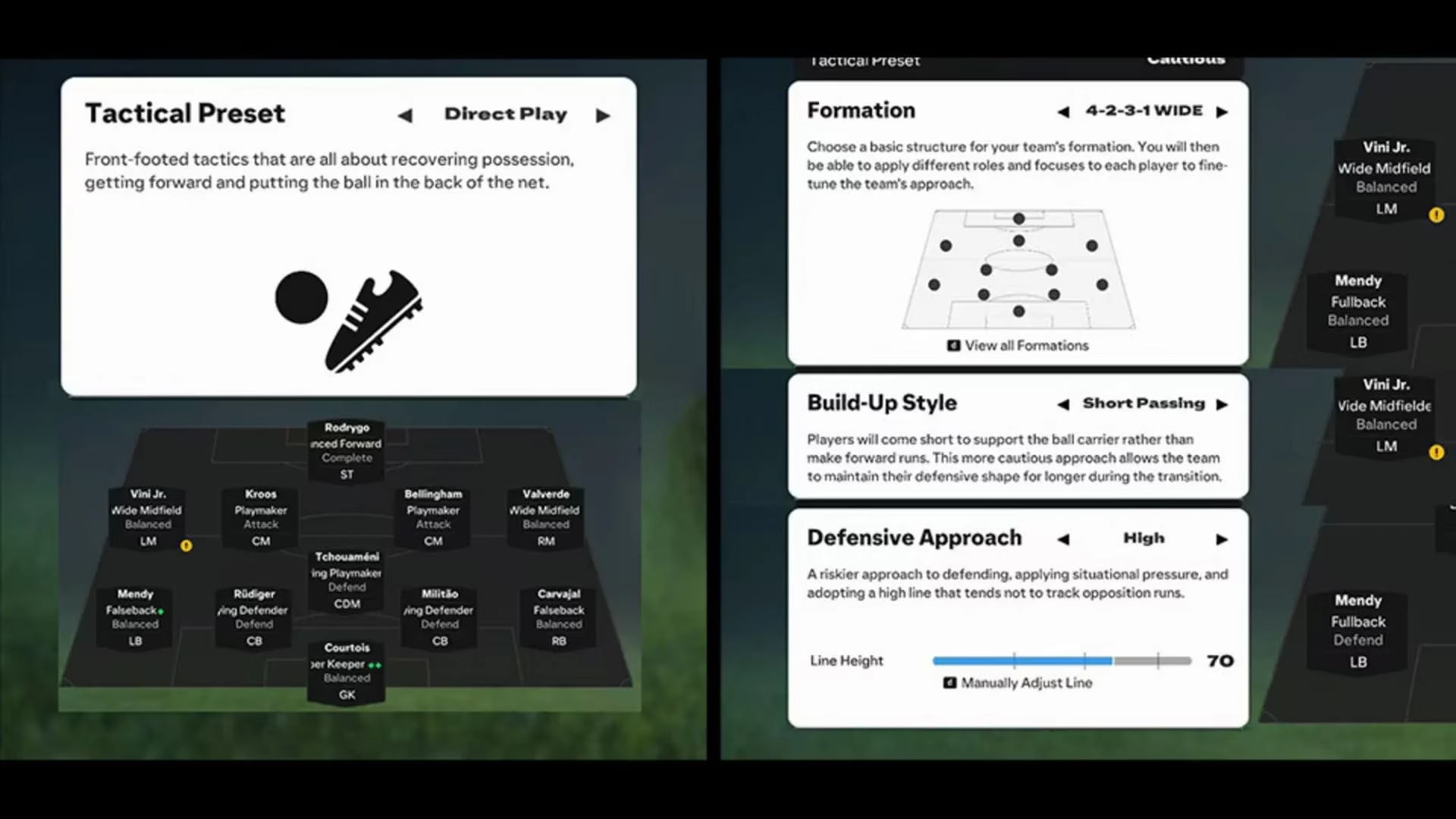
The second pillar, Dynamic Team Tactics, elevates your strategic planning from simple slider adjustments to a nuanced command center. This system allows for the implementation of complex, real-world tactical philosophies with a precision previously unseen in the franchise. The connection between your chosen tactics and your players' roles is now direct and consequential.
Your tactical setup—be it a high-pressing 4-3-3, a counter-attacking 5-3-2, or a possession-based 4-2-3-1—will only be as effective as the players executing it. A tactic demanding rapid transitions and through-balls will flounder if your striker is a 'Target Forward' with low acceleration, but it could be devastating with a 'Poacher'. Similarly, a 'Ball-Playing Defender' is essential for a 'Play Out From The Back' instruction, while a 'No-Nonsense Centre-Back' might be a liability.
This creates a beautiful layer of strategic authenticity. You must become an astute analyst of your own squad. The game challenges you: can you identify the tactical system that maximizes the collective strengths of your unique set of player roles while masking their weaknesses? The days of finding one "meta" tactic and applying it to every squad are over. Success in 2026's Career Mode will belong to the adaptable strategist.
🔄 The Game-Changer: Adaptive Smart Tactics
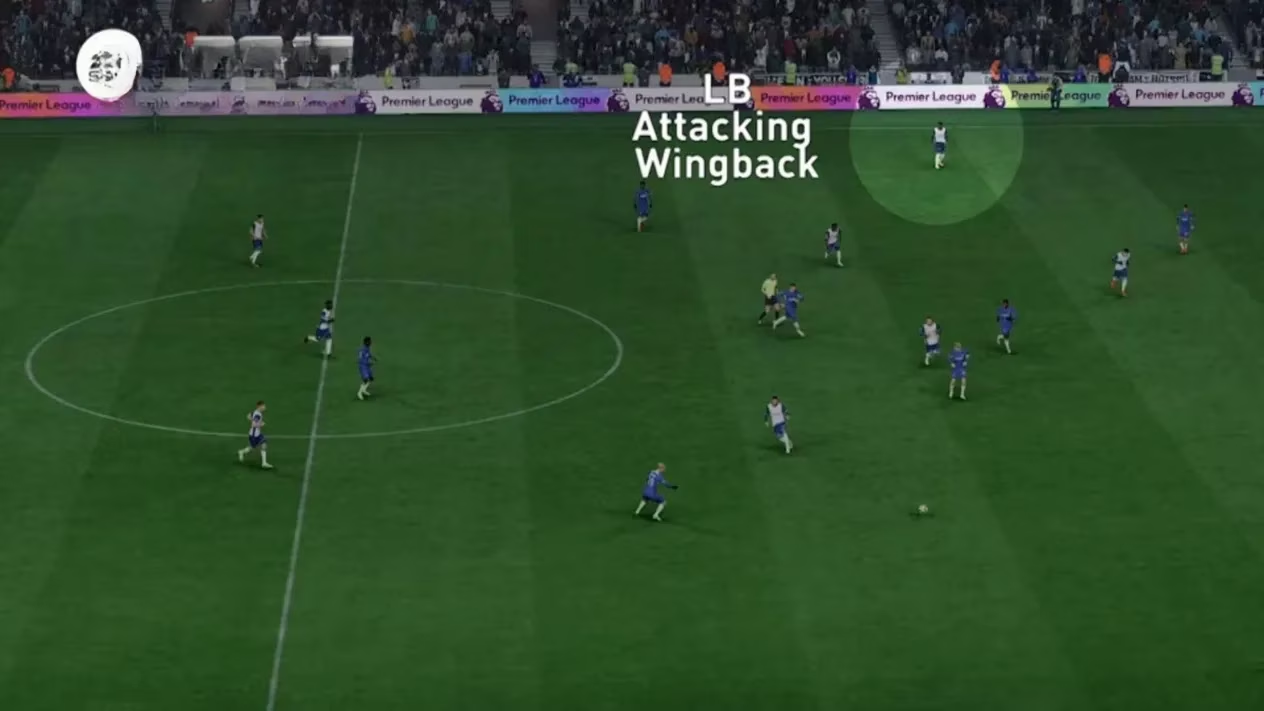
Football is a fluid, unpredictable sport, and the third pillar, Adaptive Smart Tactics, ensures the game finally reflects that during the 90 minutes. This is your in-match management toolkit, powered by real-time AI analysis. As the match unfolds, FC IQ's Smart Tactics system provides contextual suggestions and simplified interfaces for making crucial adjustments.
Imagine you're leading 1-0 but the opponent is piling on pressure. The system might highlight that your midfield is being overrun and suggest switching to a more compact formation or instructing a midfielder to adopt a 'Stay Back While Attacking' role. Conversely, if you're struggling to break down a deep block, it could recommend shifting your wingers' roles to 'Get In Behind' or increasing the tempo of your passing.
This feature does more than just offer advice; it makes nuanced tactical changes accessible without overwhelming the player with menus. However, it also adds pressure. The best managers are proactive, not just reactive. Will you recognize the need to change before the AI suggests it? Can you anticipate the opponent's switch and counter it? Smart Tactics turns each match into a dynamic chess match, where your ability to read the game and adapt is constantly tested.
The Ripple Effect: A New Era for Career Mode
The integration of FC IQ's three pillars creates a synergistic effect that fundamentally alters the Career Mode experience. The increased realism and tactical complexity mean every decision carries greater weight. A poor tactical fit can see a star player underperform, a brilliant substitution can turn a game, and a season-long philosophy can lead to glory or failure.
-
Pre-Match Preparation: Setting up your team requires deep consideration of roles and tactics.
-
In-Match Management: You are actively engaged, making adjustments based on flow and Smart Tactics feedback.
-
Long-Term Planning: Your vision for the club must align with the roles you recruit and the style you instill.
By 2026, the benchmark for football management simulations will have been raised. EA FC 25's FC IQ represents a commitment to depth over simplicity, to strategy over brute force. It asks players to think like real managers, embracing the complexity and beauty of football tactics. For the dedicated fan, the promise is immense: a Career Mode where your intelligence, adaptability, and strategic vision are the ultimate keys to unlocking virtual glory. The beautiful game, in its digital form, has never demanded more from its managers—and that is a thrilling prospect indeed.
Data referenced from HowLongToBeat can help frame how FC IQ’s deeper Career Mode loop may change the way you pace a save: as Intelligent Player Roles and Adaptive Smart Tactics push more pre-match planning and in-match adjustments, managers may find themselves budgeting longer sessions per fixture to tweak role fits, test Dynamic Team Tactics, and iterate lineups across a season rather than relying on quick, repeatable “meta” setups.